

NARDA Safety Test Solutions · personal protection and continuous monitoring
NARDA EMF Monitors: Personal RF Monitors and 24/7 Area Monitors
A measuring instrument tells you how strong the field is; a monitor warns you when a limit is exceeded. NARDA’s EMF monitors fall into two groups. Personal monitors are worn by staff working near transmitters, radars and antennas; they warn by light, sound and vibration when exposure approaches the limit value. Area monitors are installed at one location, measure the electromagnetic field around the clock, record it and report to a central system. This page covers two personal monitors and six area monitors, with values taken from the manufacturer’s datasheets.
- RadMan 2: up to 60 GHz
- Nardalert S3: up to 100 GHz
- Visual + audible + vibration alarm
- ICNIRP · 2013/35/EU · FCC · IEEE
- Area monitors: 10 Hz – 60 GHz
- Solar-powered stations with modem
- ITU-T K.83 compliant
- Ready for 5G
Model and standard selection, quotation, delivery and after-sales support are handled from Istanbul. For NARDA products our sales territory is Turkey.
What is an EMF monitor, and who uses it?
Electromagnetic fields cannot be seen or felt. A technician climbing a mast cannot know whether an antenna is transmitting at that moment or when its power is increased. A personal monitor closes that gap: it measures continuously, relates the result to the limit value of the selected safety standard and warns before a hazard arises. It is not a measuring instrument; it is a warning device, used as part of personal protective equipment.
Area monitors do the same job for a fixed location. They record the field produced by base stations near a school, hospital or residential area for months without interruption, raise an alarm when a limit is exceeded and send the data to central software. Regulators use the data to publish public exposure maps; operators use it to document site safety.
Typical users:
- Mobile operators, tower and field service companies — installation and maintenance crews on masts and rooftops
- Broadcasters and transmitter sites — high-power FM, TV and LW/MW/SW transmitter stations
- Defense industry and armed forces — test and maintenance personnel for radar, communications and electronic warfare systems
- Occupational health and safety departments — monitoring worker exposure against 2013/35/EU and ICNIRP limits
- Regulators, accredited measurement bodies and municipalities — continuous environmental EMF monitoring networks
- Airports, ports, power facilities and industry — the surroundings of radar, RF heating and high-voltage installations
- Test laboratories — fixed alarms for EMC chambers and high-power test set-ups
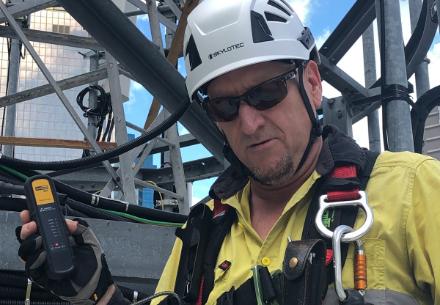
A personal monitor is worn close to the body, outside the clothing.
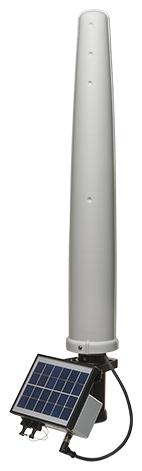
Solar-powered area monitor: measures for months without mains power or cabling.
Which monitor do you need?
The first question is: are you protecting a person or a place? A personal monitor for a person, an area monitor for a place. Then the frequency range and the standard on which the assessment is based are defined.
| Your need | Recommended product | Why |
|---|---|---|
| Base station and rooftop crews; up to 8 GHz; economical | RadMan 2LT | 50 MHz – 8 GHz; E and H field; 800 hours of battery life; IP65 |
| Staff working near 5G millimetre-wave, microwave links, satellite, radar | RadMan 2XT | Up to 60 GHz; pulse mode (30 ms); data logger with 100,000 events |
| Antenna systems near high-voltage lines or substations | RadMan 2XT ELF immune or Nardalert S3 | 50/60 Hz immunity above 250 kV/m (RadMan 2XT ELF immune) or 100 kV/m (Nardalert S3) |
| Coverage up to 100 GHz; pulsed radar; numeric reading on a display | Nardalert S3 | 100 kHz – 100 GHz; diode + thermocouple sensor (True RMS); colour LCD; field-replaceable sensor module |
| Continuous supervision of a room, laboratory or transmitter building; local audible alarm and relay output | SMARTS II | 400 MHz – 100 GHz; wall or ceiling mounted; adjustable threshold |
| Compact, flexible area monitoring; on a wall, on a tripod or handheld; mobile app | SMARTS AMC | Interchangeable probes up to 60 GHz; Wi-Fi, Ethernet, PoE; no SIM card required |
| Long-term broadband monitoring outdoors; no mains supply | AMB-8059 | Probes from 10 Hz to 60 GHz; solar panel and 2G/4G modem; ITU-T K.83 |
| Monitoring that separates the contribution of each service (2G, 4G, 5G, FM, TV) | AMS-8061 | 100 kHz – 6 GHz; up to 20 individually defined frequency bands |
| Surroundings of long-, medium- and short-wave transmitter stations | AMS-8063 | 9 kHz – 30 MHz; electric and magnetic field; up to 100 frequencies |
| Spectrum-analyzer-level detail; including 5G FR2; transportable station | SignalShark EMF | 9 kHz – 6 GHz and 24.25 – 29.5 GHz; built-in LTE router; three transport cases |
Personal RF monitors
Two product families reach the same goal by different routes. RadMan 2 is simple, light and has a very long battery life; it shows the status with six LEDs. Nardalert S3 shows a numeric value on its colour display, goes up to 100 GHz and has a field-replaceable sensor module. In both, the frequency response of the sensors is shaped to the limit curve of the selected standard, so the result is directly a “percentage of the limit” at every frequency.
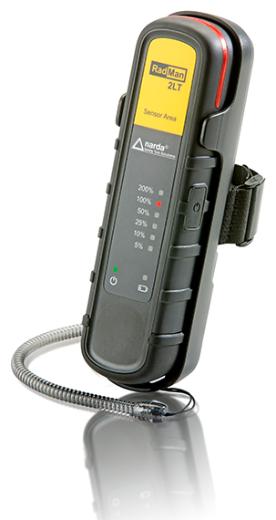
RadMan 2LT
50 MHz – 8 GHz · basic model
Electric field 50 MHz – 8 GHz, magnetic field 50 MHz – 1 GHz. Six LEDs: 5, 10, 25, 50, 100 and 200% of the limit. Two alarm thresholds at 50% and 100%. Memory for 2,880 events (48 hours at 1-minute intervals). For crews on mobile communication and broadcast sites.
RadMan 2XT
Up to 60 GHz · 5G and radar
Electric field from 900 kHz to 60 GHz depending on the standard, magnetic field up to 1 GHz. Integration time 1 s or 30 ms (pulse mode). Data logger with 100,000 events at 1 s – 6 min intervals. Optional: thresholds adjustable from 10% to 310% via PC, and ELF immunity above 250 kV/m.
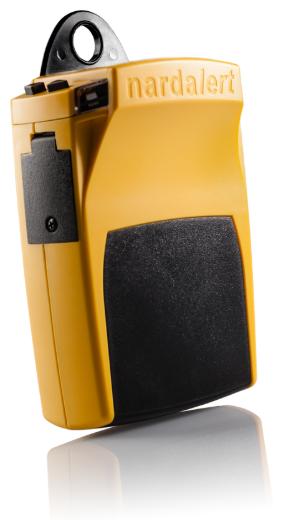
Nardalert S3
100 kHz – 100 GHz · with display
Diode-dipole and thermocouple array; True RMS for pulsed signals. Numeric reading on a 1.77-inch colour LCD. Two alarms: default 50% and 200%, adjustable. Memory for 62,000 events. Field-replaceable sensor module; immune to 100 kV/m at 50/60 Hz.
| RadMan 2LT | RadMan 2XT | Nardalert S3 | |
|---|---|---|---|
| Electric field | 50 MHz – 8 GHz | 900 kHz / 3 MHz / 10 MHz – 60 GHz, depending on standard | 100 kHz – 100 GHz (IEEE model: 3 MHz – 100 GHz) |
| Magnetic field | 50 MHz – 1 GHz | 27 MHz – 1 GHz (ICNIRP 98, SC6) · 3 MHz – 1 GHz (FCC) · 1 MHz – 1 GHz (ICNIRP 2020 occupational) | — |
| Sensor | Diode-based isotropic E-field and H-field sensors | Diode-based isotropic E-field and H-field sensors | Radial field, diode-dipole and thermocouple array |
| Indication | 6 LEDs: 5 / 10 / 25 / 50 / 100 / 200% | 6 LEDs: 5 / 10 / 25 / 50 / 100 / 200% | 1.77-inch colour TFT LCD + LED |
| Alarm thresholds | 50% and 100% (fixed) | 50% and 100%; adjustable from 10% to 310% on optioned models | Alarm 1: 10 – 100% or off · Alarm 2: 20 – 200% (default 50% and 200%) |
| Alarm type | Visual, audible, vibration | Visual, audible, vibration | Visual (LCD, LED), audible and/or vibration |
| Integration time | RMS, 1 s | RMS, 1 s or 30 ms (pulse mode) | — |
| Data logger | 2,880 events (48 hours), 1 min | 100,000 events; 1 s – 6 min or off | 62,000 events; from 4 per second to 1 per 60 seconds (4.3 hours – 43 days) |
| Overload (CW) | 20 dB above standard; max. 10 kV/m or 26.5 A/m | 20 dB above standard; max. 10 kV/m or 26.5 A/m | 3000% of standard |
| Overload (pulse peak) | 40 dB above standard (pulse width < 10 µs) | 40 dB above standard (pulse width < 10 µs) | 32 dB above standard |
| 50/60 Hz (ELF) immunity | 10 kV/m | 10 kV/m; > 250 kV/m (typ.) on ELF immune models | 100 kV/m |
| Interface | USB-C | USB-C | USB or optical RS-232 |
| Battery | 2 × AA NiMH, charged via USB; 800 hours (without alarm) | 2 × AA NiMH, charged via USB; 800 hours (without alarm) | RCR123A Li-ion, charged via USB; 25 hours |
| Protection class | IP65 | IP65 | Not stated in the datasheet; weatherproof pouch available |
| Operating temperature | −10 to +55 °C | −10 to +55 °C | −10 to +50 °C |
| Dimensions | 165 × 47 × 31 mm | 165 × 47 × 31 mm | 117 × 83 × 32 mm |
| Weight | 185 g | 185 g | 230 g |
| Calibration interval | 3 years | 3 years | Mainframe 4 years, sensor 2 years |
| PC software | RadMan 2-TS (included) | RadMan 2-TS (included) | NS3-TS (included) |
| Datasheet |
RadMan 2 sets and part numbers
Each set is shaped to one standard; you choose the standard when ordering. A set contains the basic unit, mounting adapter, fastening strap, lanyard, USB cable, operating manual, carrying case and calibration certificate.
| Standard | 2LT | 2XT | 2XT ELF immune |
|---|---|---|---|
| ICNIRP 1998 occupational (ICNIRP 2020 compliant) | 2280/101 | 2281/101 | 2281/121 |
| FCC 96-326 occupational | 2280/102 | 2281/102 | 2281/122 |
| Safety Code 6 (2015) controlled | 2280/103 | 2281/103 | 2281/123 |
| ICNIRP 1998 general public, E-field only | 2280/111 | 2281/111 | — |
Part numbers of 2XT models with adjustable thresholds end in “-1” (e.g. 2281/101-1, 2281/121-1).
Accessories: belt bag 2250/92.06 · benchtop tripod 2244/90.32 · handle extension (0.42 m) 2250/92.02 · car charger 2259/92.20 · power supply (Europe) 2259/92.21.
Nardalert S3 sensors and part numbers
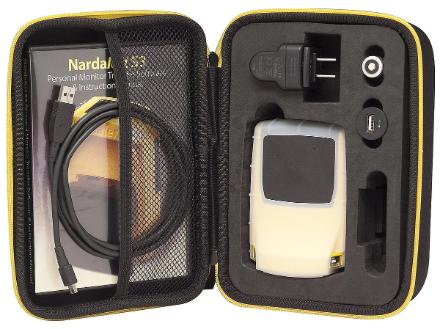
On the Nardalert S3 the standard is determined by the sensor module fitted. Because the module can be replaced in the field, the monitor stays in service during calibration; work continues with a spare sensor.
| Standard | Sensor | Monitor + sensor set |
|---|---|---|
| ICNIRP 1998 · 2013/35/EU | 2271/31 | 2271/131 |
| FCC 1997 · Japan RCR-38 | 2271/01 | 2271/101 |
| IEEE C95.1-2019 | 2271/12 | 2271/112 |
| Safety Code 6 (2015) | 2271/22 | 2271/122 |
| Monitor without sensor | — | 2270/101 |
NARDA’s product page additionally lists support for ACGIH, ARPANSA RP3 and NATO STANAG 2345. Accessories: weatherproof pouch 2270/92.01 · fiber optic cables and optical-to-USB converter (2260/90.07) for remote reading.
24/7 area monitors
An area monitor is installed at one location and observes the electromagnetic field there unattended and without interruption. There are two kinds: broadband monitors give the total field as one value; frequency-selective monitors split the total into services and show how much each transmitter contributes.
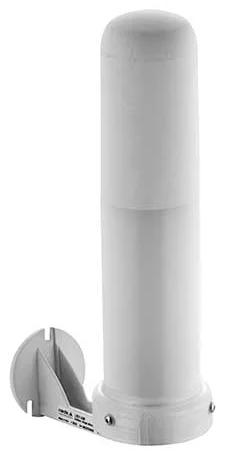
SMARTS AMC
Compact, flexible · up to 60 GHz
Area Monitoring Compact. Measures up to 60 GHz with interchangeable flat and shaped probes and checks against ICNIRP, FCC and SC6 limits. Mounts on a wall, a roof or a tripod, or is used handheld. USB-C, optical fiber, Wi-Fi, Bluetooth and Ethernet; no SIM card required. Up to 100 hours on battery; powered via USB or PoE. IP42 version for indoor use, IP65 for outdoor use.
AMB-8059
Broadband · 10 Hz – 60 GHz
Broadband station that monitors electric and magnetic field simultaneously. Solar panel or long-life battery, internal 2G/4G modem and Wi-Fi. One measurement per second; storage interval 30 s – 15 min; two alarm thresholds; SMS alerts to up to 10 phones. More than 4,500 installations worldwide according to NARDA. ITU-T K.83 compliant.
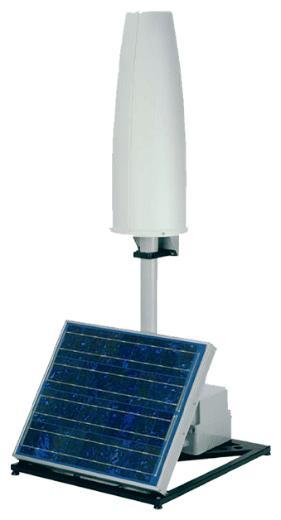
AMS-8061
Frequency-selective · 100 kHz – 6 GHz
Measures up to 20 individually defined frequency bands selectively with a triaxial isotropic antenna. 0.01 – 200 V/m; dynamic range above 60 dB. 2 × 40 W solar panels, internal 4G modem, Ethernet, USB. IP55. More than 3,500 stations in use worldwide according to NARDA. ITU-T K.83 compliant.
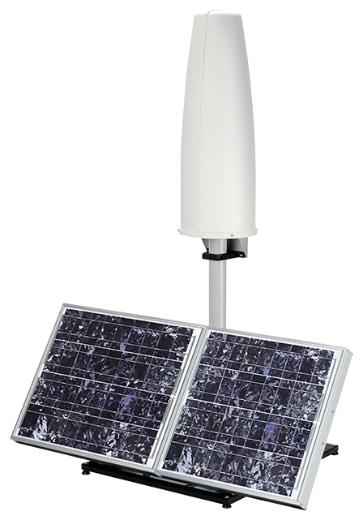
AMS-8063
Frequency-selective · 9 kHz – 30 MHz
For the surroundings of long-, medium- and short-wave transmitters. Electric field 0.1 – 1000 V/m; magnetic field 0.003 – 300 A/m in two modes. Built-in spectrum analyzer for up to 100 user-defined frequencies. Solar-powered models with Wi-Fi or RS-232 and a mains-powered model with optical fiber. IP54.
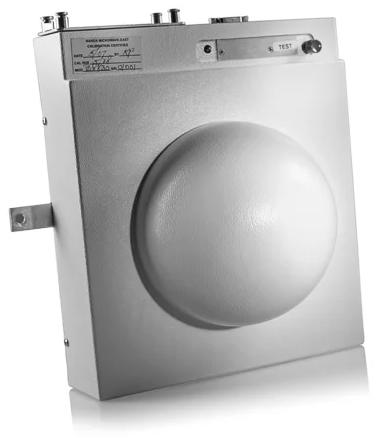
SMARTS II
Stationary alarm · 400 MHz – 100 GHz
Wall- or ceiling-mounted area monitor that works without an operator. Diode and thermocouple sensor array with a response shaped to the standard. Threshold set to 10, 25, 35 or 50%. Audible and visual alarm; remote alarm via voltage output and relay contact. 9 V lithium battery or 12 – 24 V DC. 0.74 kg.
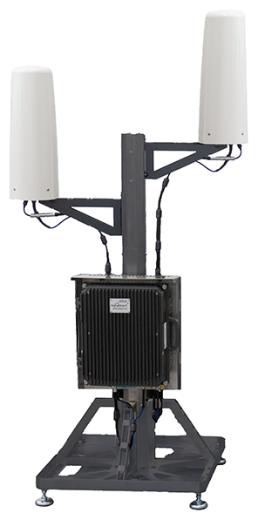
SignalShark EMF
Selective monitoring system · 9 kHz – 6 GHz + 5G FR2
A system built on the SignalShark Outdoor Unit real-time receiver. 9 kHz – 6 GHz with isotropic probe modules; 24.25 – 29.5 GHz with an optional antenna. Collapsible mast, built-in LTE router (OpenVPN), three transport cases. Designed to be set up by non-experts. IP65.
Area monitor comparison
| SMARTS AMC | AMB-8059 | AMS-8061 | AMS-8063 | SMARTS II | SignalShark EMF | |
|---|---|---|---|---|---|---|
| Type | Broadband, compact | Broadband | Frequency-selective | Frequency-selective | Broadband, stationary alarm | Frequency-selective |
| Frequency | Up to 60 GHz (depending on probe) | 10 Hz – 60 GHz (depending on probe) | 100 kHz – 6 GHz | 9 kHz – 30 MHz | 400 MHz – 100 GHz | 9 kHz – 6 GHz; option 24.25 – 29.5 GHz |
| Field measured | Depending on probe | Electric and magnetic (dual probe) | Electric and magnetic (depending on antenna) | Electric and magnetic | Shaped to the standard | Magnetic (9 kHz – 250 MHz) and electric (200 MHz – 6 GHz) |
| Resolution | Total value | Total; 3 – 4 bands with multi-band probes | Up to 20 bands | Up to 100 frequencies | Total, in % | Spectrum level |
| Power | Battery (up to 100 hours), USB, PoE | Battery or solar panel + rechargeable battery | 2 × 40 W solar panels + 12 V battery | Solar panels + battery, or mains | 9 V lithium battery or 12 – 24 V DC | 10 – 30 VDC; power supply included |
| Communication | USB-C, fiber, Wi-Fi, Bluetooth, Ethernet | 2G/4G modem, Wi-Fi, USB, Ethernet, optical (depending on model) | 4G modem, Ethernet, RS-232, USB | Wi-Fi, RS-232 or fiber (depending on model) | Relay contact, voltage output | Built-in LTE router, OpenVPN |
| Protection | IP42 / IP65 | IP55; IP66 optional | IP55 | IP54 | — | IP65 |
| Operating temperature | — | −20 to +55 °C | −10 to +55 °C | −20 to +55 °C | −10 to +55 °C | −20 to +55 °C |
| Dimensions / weight | — | 112 × 112 × 730 mm; 1.2 – 2.4 kg (unit) | 1480 × 1100 × 715 mm; approx. 34 kg | 1480 × 1100 × 715 mm; approx. 35 kg | 127 × 206 × 239 mm; 0.74 kg | Three transport cases |
| ITU-T K.83 | — | Compliant | Compliant | Compliant | — | — |
“—” means the value is not given in the manufacturer documents available to us. We could not access a datasheet for the SMARTS AMC; its values are taken from NARDA’s product page.
AMB-8059 models and probes
| Model | Power | Modem | Autonomy |
|---|---|---|---|
| AMB-8059/00 | Primary lithium battery | None | Also used for drive tests on a vehicle (ITU-T K.113) |
| AMB-8059/01 | Solar panel + rechargeable battery | None | — |
| AMB-8059/02 | Primary lithium battery | 2G/4G | About 8 months (with 1 minute of data transmission per day) |
| AMB-8059/03 | Solar panel + rechargeable battery | 2G/4G | More than 80 days in total darkness |
| Probe | Type | Frequency | Measurement range |
|---|---|---|---|
| EP-1B-01 | E-field, single band | 100 kHz – 3 GHz | 0.2 – 200 V/m |
| EP-1B-03 | E-field, single band | 100 kHz – 7 GHz | 0.2 – 200 V/m |
| EP-1B-08 | E-field, single band | 100 kHz – 8 GHz | 0.2 – 200 V/m |
| EP-1B-05 | E-field, single band | 300 kHz – 18 GHz | 0.5 – 800 V/m |
| EP-1B-06 | E-field, single band | 300 kHz – 40 GHz | 0.5 – 800 V/m |
| EP-1B-04 | E-field, low frequency | 10 Hz – 5 kHz | 5 V/m – 20 kV/m |
| HP-1B-01 | Magnetic field, low frequency | 10 Hz – 5 kHz | 50 nT – 200 µT |
| EP-3B-01 | E-field, tri-band | 100 kHz – 3 GHz | 0.2 – 200 V/m |
| EP-4B-01 | E-field, quad-band | 100 kHz – 3 GHz | 0.2 – 200 V/m / 0.03 – 30 V/m |
| EP-4B-02 | E-field, quad-band | 100 kHz – 7 GHz | 0.2 – 200 V/m / 0.03 – 30 V/m |
| EHP-2B-01 | Shaped E + H: ICNIRP 1998, SC6 2015 | E: 500 kHz – 9.25 GHz · H: 20 MHz – 1 GHz | — |
| EHP-2B-02 | Shaped E + H: ICNIRP 1998, SC6 2015 | E: 500 kHz – 60 GHz · H: 20 MHz – 1 GHz | — |
| EHP-2B-03 | Shaped E + H: ICNIRP 2020, FCC 96-326 | E: 1.34 MHz – 9.25 GHz · H: 1 – 1000 MHz | — |
| EHP-2B-04 | Shaped E + H: ICNIRP 2020, FCC 96-326 | E: 1.34 MHz – 60 GHz · H: 1 – 1000 MHz | — |
Memory: more than 364 days at one record per minute. With the car mounting kit (8059/CMK, 650.800.300) the field is mapped while driving (CMK datasheet). Country of origin: Italy. Recommended calibration interval 24 months.
AMS-8061, AMS-8063 and SMARTS II
AMS-8061 antennas
| Antenna | Frequency | Part no. |
|---|---|---|
| EHA-2B-01 | 100 kHz – 6 GHz | 650.000.317 |
| HA-1B-01 | 100 kHz – 110 MHz | 650.000.318 |
| EA-1B-01 | 110 MHz – 6 GHz | 650.000.319 |
| EA-1B-02 | 27 MHz – 3 GHz | 650.000.320 |
| AMS-8061/00 base unit | — | 620.000.274 |
Memory: 18 months at a 6-minute storing rate, 3 months at 1 minute (circular). Battery autonomy 48 – 60 hours; continuous with adequate sunlight.
AMS-8063 models
| Model | Power | Communication |
|---|---|---|
| AMS-8063/00 | Solar panels (2 × 40 W) + battery | Wireless LAN 802.11b |
| AMS-8063/01 | Solar panels (2 × 40 W) + battery | RS-232 |
| AMS-8063/02 | Mains | Optical fiber |
Battery 12 V 32 Ah; more than 48 hours on battery alone. Consumption 4 W. Wall mounting kit 650.800.016.
SMARTS II models
| Standard | Part no. |
|---|---|
| ICNIRP 1998 occupational | 2688/104 |
| FCC 1997 occupational / controlled | 2688/101 |
| IEEE C95.1-2019 restricted environment | 2688/105 |
Measurement range up to 3000% of the limit value for CW. Relay: SPDT, 3 W, 250 mA, 28 V (DC supply operation only). Recommended functional test interval 2 years.
SMARTS AMC
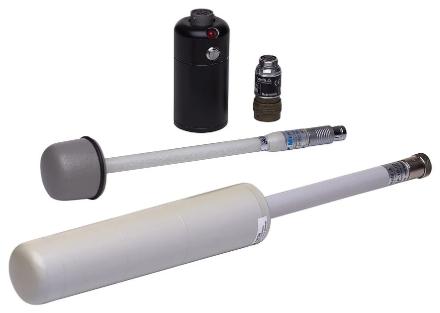
Integrated sensors for GPS, barometer, temperature, humidity, accelerometer and compass. SMARTS AMC Manager for local networks; notifications to phone and smartwatch via Android, iOS and WearOS apps.
EMF monitoring: a short guide
Six points worth knowing when selecting and using a monitor.
A monitor does not replace a measuring instrument
A personal monitor warns; it does not produce measurements for a report. Its indication is in coarse steps and, because it is worn on the body, the body affects the field. The exposure assessment of a site is made with a calibrated measuring instrument; the monitor then provides safety in day-to-day work.
Response shaped to the standard
Limit values vary with frequency. The monitor’s sensor weights each frequency by the limit at that frequency and gives the result as a percentage; the user does not need to know the frequency. That is why you choose the standard when ordering, and the device evaluates against that standard only.
Why both E and H?
Very close to an antenna, electric and magnetic fields behave independently; one can be low while the other is high. RadMan 2 also monitors the magnetic field at lower frequencies. Above 1 GHz the working distance is in practice in the far field and an electric field sensor is sufficient.
ELF immunity
On antennas mounted on high-voltage pylons, the strong 50 Hz electric field can mislead an RF monitor into false alarms. ELF immunity states the level the monitor can ignore: 10 kV/m on the standard RadMan 2, 100 kV/m on the Nardalert S3, above 250 kV/m on the RadMan 2XT ELF immune.
Broadband or selective monitoring?
A broadband area monitor is economical and answers the question “is the limit exceeded?”. A selective monitor splits the total into services; when a new transmitter goes on air or an operator raises power, the source of the change is visible. Public monitoring networks often use both.
ITU-T K.83
The International Telecommunication Union’s recommendation on the monitoring of electromagnetic field levels; it describes how monitoring stations measure, record and report. AMB-8059, AMS-8061 and AMS-8063 comply with it.
Common situations in the field
| Situation | Likely cause | What to do |
|---|---|---|
| The monitor alarms continuously near a high-voltage line | The 50 Hz electric field affects the sensor | Use a model with high ELF immunity: RadMan 2XT ELF immune or Nardalert S3 |
| Near a radar the alarm is delayed or does not come at all | The 1-second integration averages out short pulses | Switch on pulse mode (30 ms) on the RadMan 2XT, or use the Nardalert S3 with its True RMS sensor |
| The monitor does not react in front of a 26 GHz or 60 GHz link | The frequency is outside the monitor’s range (2LT up to 8 GHz) | Choose RadMan 2XT (60 GHz) or Nardalert S3 (100 GHz) |
| The alarm sounds often and the crew switches the monitor off | The threshold is low for the working conditions | Use a model with adjustable thresholds and set them with the safety officer. Switching the monitor off is not a solution |
| The monitor is carried in a pocket | Body and clothing shadow the sensor | Wear it with its adapter, outside the clothing, at chest height |
| Area monitor data does not reach the central system | No coverage, or a SIM / subscription problem | Check modem signal and the line; data is kept in the device memory and transferred when the connection returns |
| A broadband monitor shows a limit violation but the source is unclear | A total value does not separate services | Install a selective monitor (AMS-8061, SignalShark EMF) or measure on site with a selective instrument |
| A solar-powered station shuts down in winter | Insufficient sunlight | Check panel orientation and shading; reduce the data transmission rate; add external power |
| The crew is unprotected while the monitor is being calibrated | No spare | Keep a spare sensor module for the Nardalert S3 or a spare RadMan; stagger calibrations |
Frequently asked questions
What is a personal RF monitor?
A device worn by a person working near transmitters, antennas or radars that continuously monitors exposure to electromagnetic fields and warns by light, sound and vibration when the limit value is approached. It is also called an RF dosimeter or personal radiation monitor; the radiation in question is non-ionizing.
What is the difference between RadMan 2LT and 2XT?
The 2LT measures up to 8 GHz, the 2XT up to 60 GHz. The 2XT also offers pulse mode (30 ms), a data logger with 100,000 events and, as options, adjustable thresholds and ELF immunity above 250 kV/m. Housing, battery life (800 hours) and protection class (IP65) are the same.
RadMan 2 or Nardalert S3?
RadMan 2 if long battery life, low weight, IP65 and simple operation come first. Nardalert S3 if you need coverage above 60 GHz, True RMS on pulsed radar signals, a numeric reading on a display or a field-replaceable sensor.
Are they suitable for 5G?
For 5G bands below 6 GHz the RadMan 2LT is sufficient. Millimetre-wave bands (26 GHz and above) need the RadMan 2XT or the Nardalert S3. Among the area monitors, AMB-8059 and SMARTS AMC have probes up to 60 GHz, and SignalShark EMF has a 24.25 – 29.5 GHz antenna.
Do monitors need calibration?
Yes. Intervals recommended by the manufacturer: 3 years for RadMan 2; 4 years for the Nardalert S3 mainframe and 2 years for its sensor; 24 months for AMB-8059; a functional test every 2 years for SMARTS II. RadMan 2 also performs an automatic sensor test.
How is area monitor data collected?
The station writes measurements to its memory and, depending on the model, transfers them via 4G modem, Wi-Fi, Ethernet or fiber to PC software or an FTP server at the central site. An alarm is raised when a threshold is exceeded; AMB-8059 can send SMS to up to ten phones. NARDA also offers software for publishing the data on the Internet.
Can they be installed where there is no mains power?
Yes. The solar-powered models of AMB-8059, AMS-8061 and AMS-8063 work off-grid. AMB-8059/02 runs for about 8 months on a primary battery; AMB-8059/03 runs for more than 80 days in total darkness.
Do these products replace an electromagnetic field meter?
No. Monitors are for warning and continuous observation. A detailed exposure measurement at a location is made with a calibrated measuring instrument; see our electromagnetic field measurement page.
What are the delivery time and price?
They depend on model, standard and accessories. Tell us where the monitor will be used and for how many people or locations, and we will send a quotation.
Why PROTEL?
| Topic | How |
|---|---|
| Distributorship | General distributor of NARDA Safety Test Solutions for Turkey |
| Model selection | We define the right model together with you, based on your working environment, the frequencies involved and the applicable standard |
| Portfolio | Alongside the monitors, NARDA’s measuring instruments, spectrum monitoring and direction finding systems |
| Calibration, service, training | See our engineering, service, calibration and training page or contact us |
| Sales territory | Turkey, for NARDA products |
Request a NARDA EMF monitor quotation
To propose the right model quickly, please tell us:
- Personal or area monitor — for how many people or locations
- Working environment — base station, broadcast transmitter, radar, near a high-voltage line, laboratory…
- Frequency range — the highest frequency on site; whether millimetre-wave is present
- Standard — ICNIRP, 2013/35/EU, FCC, IEEE or the regulation your organization follows
- For area monitors — whether mains power is available, how data will be transferred (4G, Wi-Fi, Ethernet), broadband or selective
- Accessories — belt bag, spare sensor, mast, car mounting kit
- Whether training is required
E-mail: [email protected] · Phone: +90 212 221 80 60 · WhatsApp: +90 532 265 91 99
Documents
- Personal monitors: RadMan 2 datasheet · Nardalert S3 datasheet
- Area monitors: AMB-8059 · AMB-8059 car mounting kit · AMS-8061 · AMS-8063 · SMARTS II · SignalShark EMF
- NARDA pages (brochures, manuals and software): RadMan 2 · Nardalert S3 · SMARTS AMC · AMB-8059 · AMS-8061 · AMS-8063 · SMARTS II · SignalShark EMF
Related pages
- NARDA FieldMan EMR meter
- Electromagnetic field (EMF) measurement
- NARDA SignalShark — radio monitoring and localization
- Engineering, service, calibration, training
- NARDA products
Product images and product technical information on this page are © Narda Safety Test Solutions GmbH and are used with the manufacturer’s permission. Technical values are taken from the manufacturer’s datasheets; the current datasheet is binding. Source: narda-sts.com